Every developer who has built a payment form knows the ritual. Paste in 4242 4242 4242 4242. Enter any future expiration date. Type 123 for the CVV. Click submit. The payment goes through in the test environment. The developer marks the ticket as done. The form ships to production, where it immediately encounters a French customer with a Carte Bancaire card, an address containing accented characters, and a postal code format the validation regex doesn't recognise.
The standard test card is a smoke test. Useful for confirming that the payment processor integration is wired up correctly, and useless for everything else. The gap between "Stripe test card works" and "production-ready payment form" is filled with card networks, regional formats, and edge cases that the 4242 number never exercises.
What Standard Test Cards Don't Cover
Stripe's 4242 card is a Visa. It always behaves like a Visa. The number is 16 digits. The CVV is three digits. The BIN prefix identifies it as a Visa test card. Every successful test with this number tells you exactly one thing: that your Visa processing path works in the sandbox.
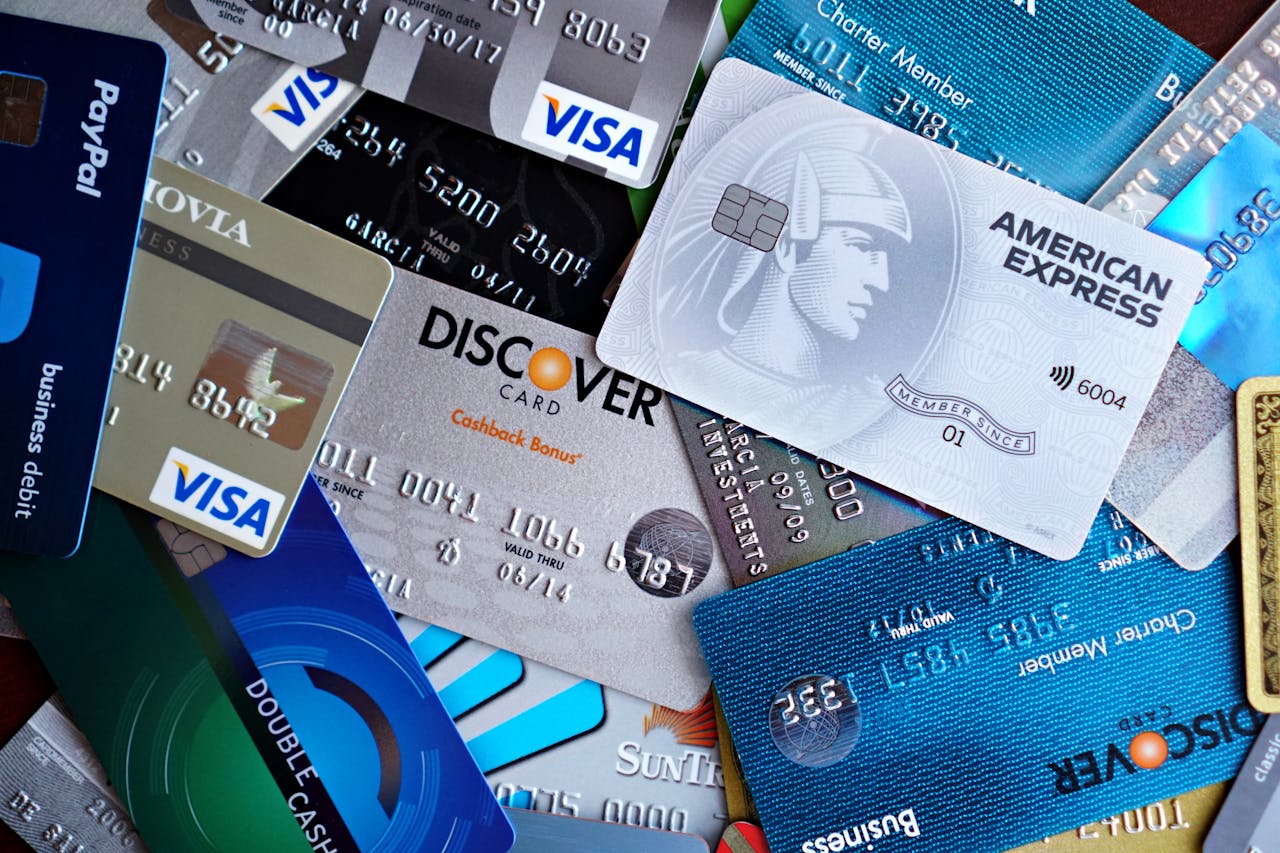
That leaves the following untested. Amex cards are 15 digits with a four-digit CVV. Maestro cards can be anywhere from 12 to 19 digits. Discover, JCB, Elo, UnionPay, and Cartes Bancaires all have different BIN ranges, different digit counts, and different validation rules. A form that hardcodes its input mask to 16 digits will truncate a 19-digit Maestro number and reject a 15-digit Amex. A CVV field that caps at three characters won't accept Amex's four-digit CID.
And that's just the card number. Billing addresses vary by country in ways that most forms don't account for. UK postcodes have a specific alphanumeric pattern. Japanese addresses put the prefecture before the city. German addresses place the postal code before the city name. Brazilian addresses include a neighbourhood field that most forms lack entirely. A payment form that was tested exclusively with US addresses will behave unpredictably when international customers use it.
The standard test card doesn't test any of this because it doesn't need to. It's a Visa. It has a US-compatible format. It works. Everything else is someone else's problem until it isn't.
What Synthetic Financial Data Covers
Synthetic financial profiles generate card numbers that are format-valid for their declared network (passing Luhn checks with correct BIN prefixes), paired with billing addresses that match the card's country of issuance. The card numbers aren't linked to real accounts and won't process real transactions, but they exercise the same validation logic that real cards would trigger.
A synthetic German profile might include a Mastercard number with a German BIN, a billing address in Berlin with a five-digit postal code, and a phone number with a +49 prefix. A synthetic Brazilian profile might include an Elo card with the correct BIN range, a CEP postal code, a neighbourhood field, and a CPF for tax identification. Each profile tests a specific combination of card network, country format, and address structure that the 4242 card can't replicate.
The internal consistency matters. A card with a Brazilian BIN paired with a German billing address will trigger fraud detection rules in most payment processors. A card with a Japanese BIN paired with a Japanese address won't. Testing with consistent profiles means you're testing the payment flow, not accidentally testing the fraud detection layer.
Client-Side Validation Is Where Most Bugs Hide
The first thing a payment form does with a card number is validate it on the client side. This is where most bugs live, because most forms are validated against a narrow set of assumptions.
Card number length validation. A regex or input mask that expects exactly 16 digits will reject Amex (15) and some Maestro variants (12-19). The fix isn't complicated, but it won't be implemented until a test reveals the problem. Testing with synthetic Amex and Maestro numbers catches this before a real customer hits it.
BIN-range detection. Most modern payment forms auto-detect the card network from the first six digits and display the corresponding logo. If the BIN table is incomplete (missing Elo, missing JCB, missing local networks like Cartes Bancaires), the form either shows no logo or shows the wrong one. Customers notice. Especially customers in countries where the local network is dominant. A French customer seeing no card logo on a form where a Visa shows up instantly will question whether the site accepts their card.
CVV length validation. Three digits for most networks, four for Amex. A form that always expects three will reject valid Amex CVVs. A form that always allows four will accept invalid three-digit CVVs with a trailing space. Both are bugs. Both are caught by testing with synthetic Amex profiles.
Expiry date handling deserves its own paragraph because it's surprisingly fragile. Some forms accept MM/YY. Some accept MM/YYYY. Some auto-format as the user types. Edge cases include the current month (should it be accepted or rejected, since the card technically hasn't expired yet?), dates far in the future (some processors reject dates more than 20 years out), and February 29 in non-leap years (not directly relevant to expiry dates, but adjacent date logic bugs tend to cluster).
Billing Address Verification
AVS (Address Verification System) checks the billing address submitted with the payment against the address on file with the card issuer. The rules vary by country. US AVS checks the numeric portion of the street address and the ZIP code. UK AVS checks the numeric portions of the address and the postcode. Many countries outside the US and UK don't support AVS at all, and the expected response code for "AVS not supported" is different from "AVS failed."
Testing with synthetic profiles from multiple countries verifies that your form handles all three AVS outcomes correctly: match, mismatch, and not supported. A form that treats "not supported" as "failed" will reject valid payments from countries without AVS coverage, which includes most of the world outside the US and UK. That's a revenue-impacting bug hiding behind a validation flag.
Address format validation catches a different class of problems. If the form's state/province dropdown only lists US states, a Canadian customer can't select Alberta. If the postal code field only accepts five digits, a UK customer can't enter "SW1A 1AA." If the city field has a character limit of 20, "Llanfairpwllgwyngyll" in Wales will be silently truncated. These aren't hypothetical. They're the kinds of bugs that get reported by real customers and then take two sprints to fix because nobody thought to test with non-US addresses.
Error Handling and Edge Cases
Payment form error handling is often tested only against the "success" path because the standard test card always succeeds. Synthetic financial data can be paired with test scenarios that exercise failure paths.
Declined cards. Most payment processor sandboxes provide specific test card numbers that simulate declines (insufficient funds, expired card, fraud block). Synthetic profiles provide the surrounding context: a complete billing address, a phone number, a name. The decline test then verifies not just that the decline is handled, but that the error message is appropriate, that the form state is preserved (the user shouldn't have to re-enter their address after a card decline), and that the failed attempt is logged correctly.
Network timeouts. What happens when the payment processor doesn't respond? The form should show a clear error, not a spinner that runs forever. Testing this requires simulating a timeout, which is a processor sandbox feature, but the synthetic profile ensures the test is realistic rather than abstract.
Duplicate submission prevention. A customer clicks "Pay" twice because the first click didn't produce immediate feedback. The form should prevent the second charge. Testing this with synthetic profiles ensures the duplicate detection works with varied input data, not just the one test card everyone uses.
Multi-Currency and Regional Payment Methods
Card payments aren't universal. iDEAL dominates in the Netherlands. Boleto is common in Brazil. SEPA direct debit covers much of Europe. Alipay and WeChat Pay are standard in China. A payment form that only handles card numbers is incomplete for international audiences.
Synthetic profiles from different countries can trigger different payment method options. A Dutch profile might test whether the form offers iDEAL alongside card input. A Brazilian profile might test whether Boleto appears as an option. A German profile might test SEPA direct debit. The profile provides the country context; the form should respond with the appropriate payment methods for that country.
Currency handling intersects with this. Does the form display prices in the customer's local currency? Does it convert correctly? Does the decimal separator change between locales ($1,000.00 vs 1.000,00 EUR)? A synthetic profile's country of origin determines the expected currency and formatting, making it straightforward to write assertions against localised pricing displays.
3D Secure and Authentication
3D Secure (3DS) adds an authentication step between the payment form and the processor. The customer is redirected to their bank's authentication page, enters a code or confirms via app, and returns to the merchant site. The flow introduces multiple points where things can break: the redirect, the bank's authentication page, the return URL, and the post-authentication confirmation.
Testing 3DS with synthetic profiles ensures the authentication flow handles different billing countries, different card networks (3DS implementations vary by network), and different authentication outcomes (success, failure, timeout, user cancellation). A synthetic Visa profile might test a straightforward 3DS2 flow. A synthetic Mastercard profile might test the fallback to 3DS1. A synthetic Amex profile might test whether the form correctly handles Amex's SafeKey implementation, which differs from Visa's and Mastercard's versions.
PCI Compliance Boundaries
Synthetic card numbers aren't real payment credentials, which means they can be used in test environments without PCI compliance concerns. Real card numbers, even in test environments, fall under PCI DSS scope. Synthetic numbers don't. This distinction matters for logging, debugging, and CI/CD pipelines.
Test logs can safely record synthetic card numbers for debugging failed tests. CI/CD pipeline output can include them without creating a compliance exposure. Developers can share synthetic test data in Slack or Jira tickets without violating cardholder data handling policies. None of this is true for real card numbers, even the processor's designated test numbers if they're formatted to look like real PANs.
Wiring It Into CI/CD
A payment form test suite built on synthetic profiles follows the same factory pattern as other synthetic data testing. A function generates a profile with the desired country, card network, and address format. The test submits the profile through the payment form. Assertions check validation behaviour, error messages, and submission outcomes.
Deterministic seeding keeps test runs reproducible. The same seed generates the same set of profiles, which means a failed test can be re-run with identical input. Rotating seeds periodically introduces new edge cases. Running the same profiles forever creates a false sense of coverage.
Tools like Faker can generate individual card numbers, but they don't produce internally consistent financial profiles. A German card number paired with a Brazilian address doesn't test anything useful. Generators like Another.IO produce complete financial profiles where the card BIN, billing address, postal code, and phone number all belong to the same synthetic person. The consistency is what makes the test meaningful rather than just random.
The end result is coverage that goes beyond "it works with the Stripe test card." It works for a German customer paying with Mastercard, a Brazilian customer with a Boleto option, and a Japanese customer with a JCB card and an address in kanji. That's the difference between passing a smoke test and shipping a form that handles production traffic.